What are the drawbacks of freeze-drying?
Freeze-drying is a widely used method for preserving materials such as pharmaceuticals and foods due to its ability to retain the quality of the product during the process. However, the process comes with distinct disadvantages and limitations that can impact its practicality and overall value.
This article will explore the primary drawbacks of freeze-drying, particularly in regard to time and cost. It further discusses its potential negative effects on product attributes, offering a comprehensive look at why alternative drying methods are gaining interest.
What are the disadvantages of freeze-drying?
Despite its recognized benefits in preserving nutrients and extending shelf life, freeze-drying presents several limitations. When considering what are the downsides of freeze drying, the primary concern is its time-intensiveness, with a single batch often requiring 24–48 hours to complete. In pharmaceutical-grade freeze dryers, this can extend to several days depending on formulation and batch size. This prolonged processing time directly contributes to higher overall operational expense.
Further, concerning the advantages and disadvantages of freeze-drying in the pharmaceutical industry, key drawbacks include the potential for more fragile product structures post-drying and the high capital investment required for equipment. Moreover, the throughput achieved may be at a reduced level when compared to spray or pulse drying. Freeze drying processes generally are energy-intensive, with actual efficiencies ranging from 20% to 30%, making it a major operational cost.
Why are freeze-dryers so expensive?
Freeze-dryers are costly due to the complex technology required to create and maintain their specific operational environments. To explain the process of how do freeze-dryers work, it first involves freezing the material, then applying a vacuum to sublimate the ice during primary drying. Next, residual water is removed through desorption during secondary drying. This multi-step method demands specialized vacuum pumps, refrigeration systems, condensers, and shelf heating/cooling units, all of which are expensive to acquire and maintain.
The precision required for temperature and pressure control further adds to the complexity and cost. The sublimation process is heavily dependent on maintenance of the sublimation front temperature, which is precisely controlled by the shelf temperature. These intricate control mechanisms and the energy demands of operating in a low-temperature vacuum contribute substantially to both the initial equipment costs and ongoing energy consumption. Additionally, the labor and maintenance associated with these complex systems add to the overall operational expense.
What are the negative effects of freeze-drying?
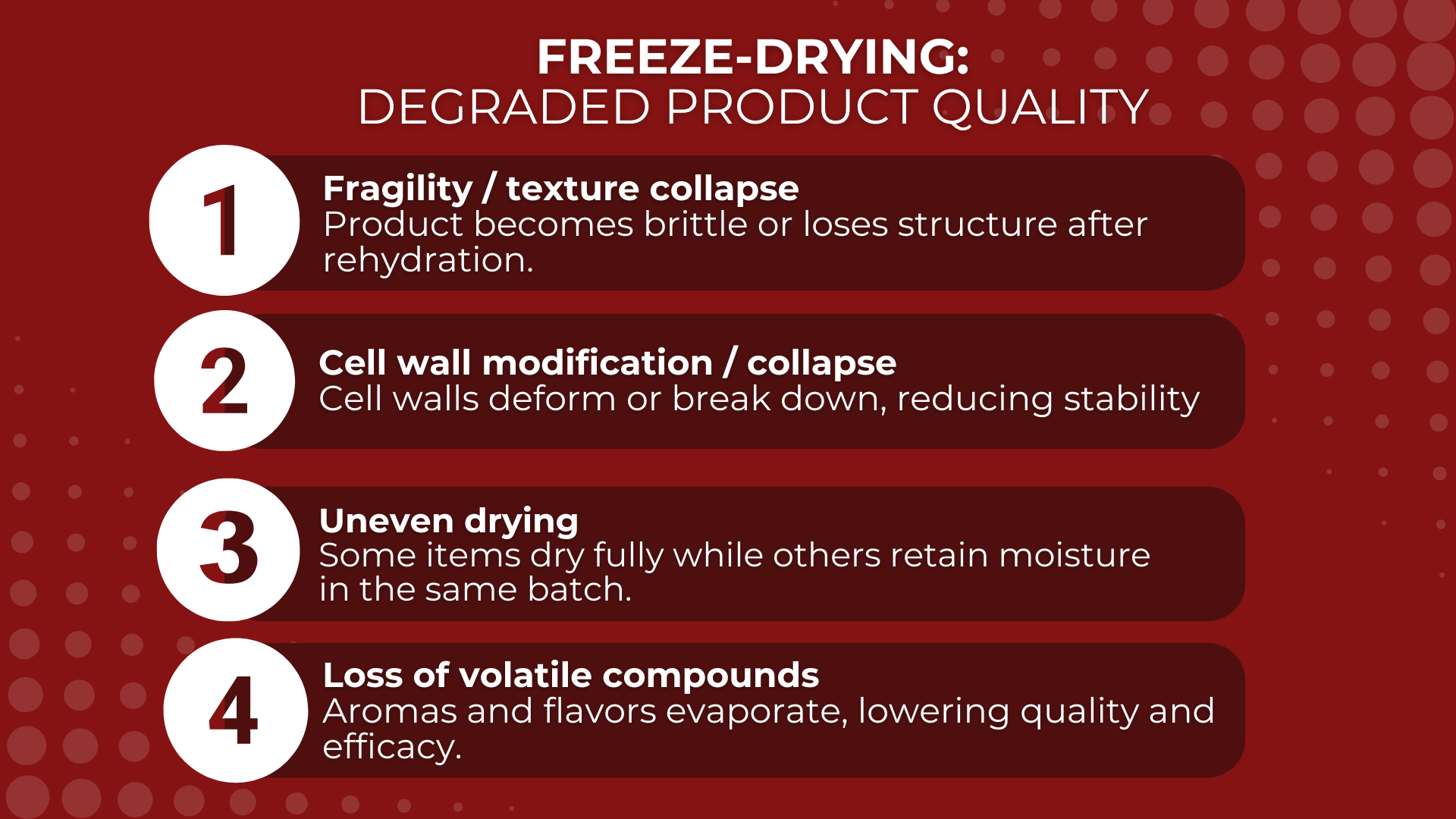
Freeze-drying can lead to several undesirable outcomes that affect product quality. One significant negative effect is the potential for product texture degradation, often resulting in brittleness or collapse after rehydration. Drying processes can induce physical and biochemical reactions, leading to the modification of cell walls or even cellular collapse. This is particularly challenging for fragile materials like gels, where preventing structural damage during drying is critical to maintaining quality.
One major issue determining what is the downside of freeze drying is the challenge of uneven drying, especially in large-scale batches. This can result in variations in product quality across a batch. In fact, batch heterogeneity poses serious challenges to the monitoring system and requires the use of a much more conservative control algorithm to guarantee product quality. Lastly, the process can cause a loss of volatile aromatic compounds, which significantly impacts the flavor or efficacy of products – particularly in food and pharmaceutical applications.
Is a freeze dryer better than a spray dryer?
The preference for a freeze dryer over a spray dryer depends on specific product needs and priorities. Freeze-dryers are superior in their ability to preserve nutritional content and extend shelf life by removing moisture at low temperatures. However, this comes at a significant trade-off. Freeze-dryers are considerably more expensive to purchase and operate, and require much longer processing times, sometimes taking 24–48 hours per batch.
Conversely, spray dryers are generally more affordable and operate faster, making them suitable for applications where compromises in nutrient retention or texture might be acceptable. When considering are freeze dryers worth it?, a cost-benefit analysis highlights these differences:
- Freeze-Drying:
- Preserves a high percentage of nutritional value and original texture.
- Provides extended shelf life for products.
- Involves high capital investment for equipment and substantial energy consumption.
- Requires lengthy processing times, typically spanning 1-2 days per batch, with pharmaceutical freeze dryers often taking longer depending on formulation and drying stages.
- Spray Drying:
- Offers a lower initial investment and reduced operational costs.
- Features much faster drying cycles compared to freeze-drying.
- Suitable for a range of products where process speed and cost efficiency are priorities, even with some potential changes to texture or nutrient profile.
Ultimately, the choice hinges on balancing the desire for superior preservation with practical considerations of cost, time, and specific product requirements.
Final Thoughts
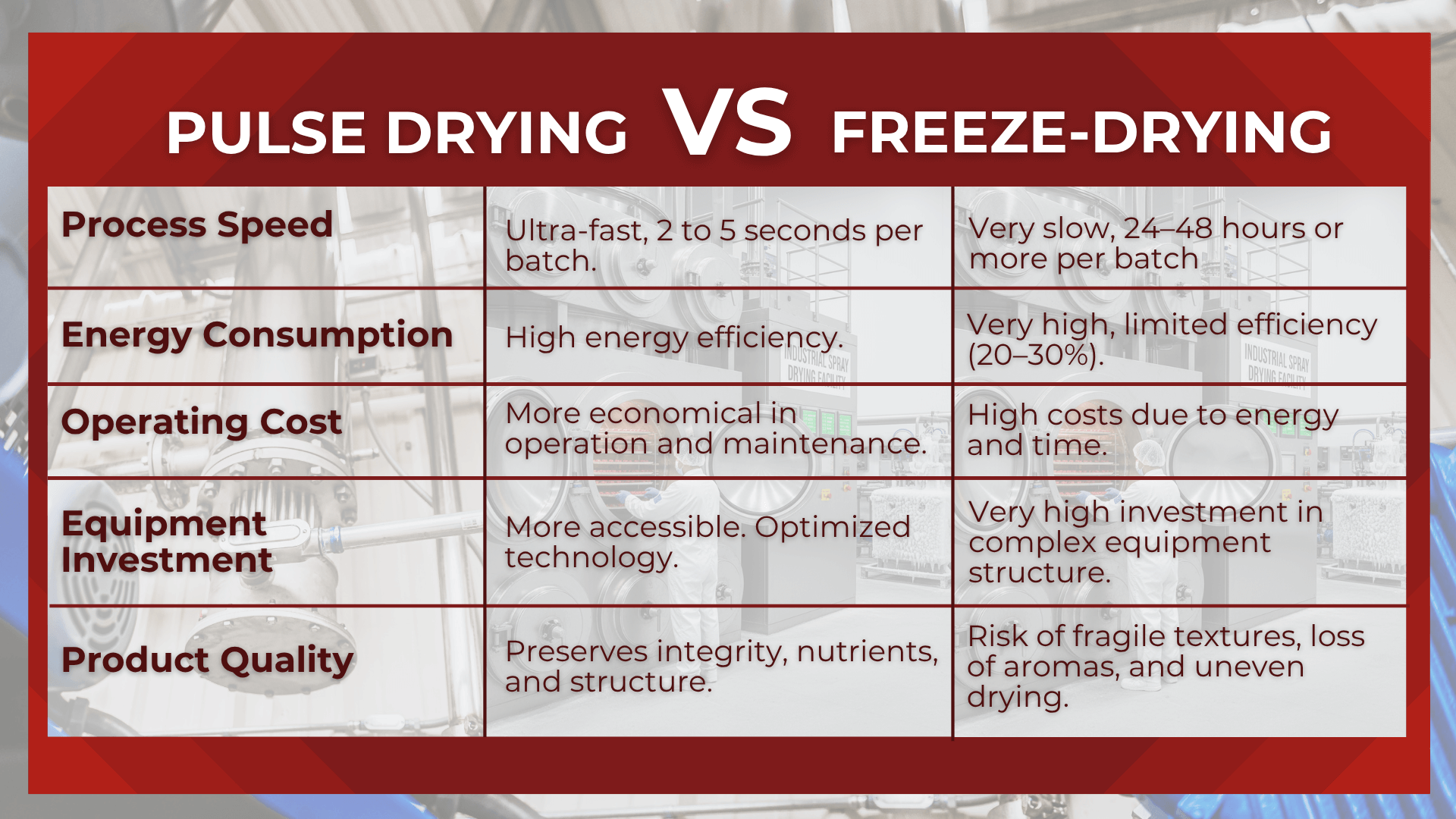
Freeze-drying involves high costs, lengthy processing times (often 24–48 hours per batch), and potential risks to product quality. As a more efficient and cost-effective alternative, Pulse Drying Systems deliver faster drying rates and ultra-short residence times (typically 2 to 5 seconds), helping preserve product integrity while maximizing energy efficiency.
If you’re seeking a more efficient, cost-effective alternative to freeze-drying, explore how Pulse Drying Systems may better fit your processing needs. Learn more about our advanced drying technologies at www.pulsedry.com.