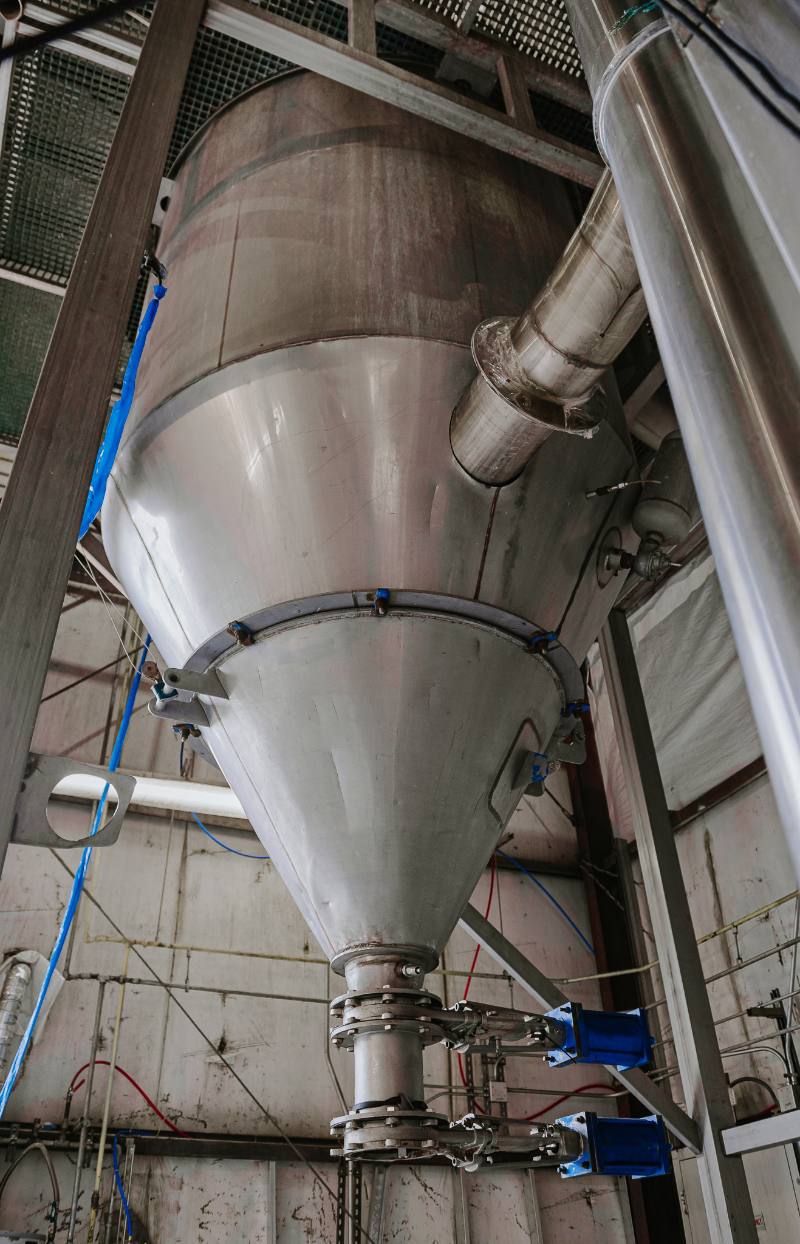
Less heat in.
More powder out.
Built for Europe's standards.
European producers are held to some of the strictest
energy and emissions rules in the industry. Pulse dryers
are engineered around that reality — lower thermal
energy per pound, no high-pressure feed system.
Thermal energy per
pound of water removed
Conventional spray dryers typically
run 2,500–4,000 BTU/lb — up to 2.7×
the energy for the same pound.
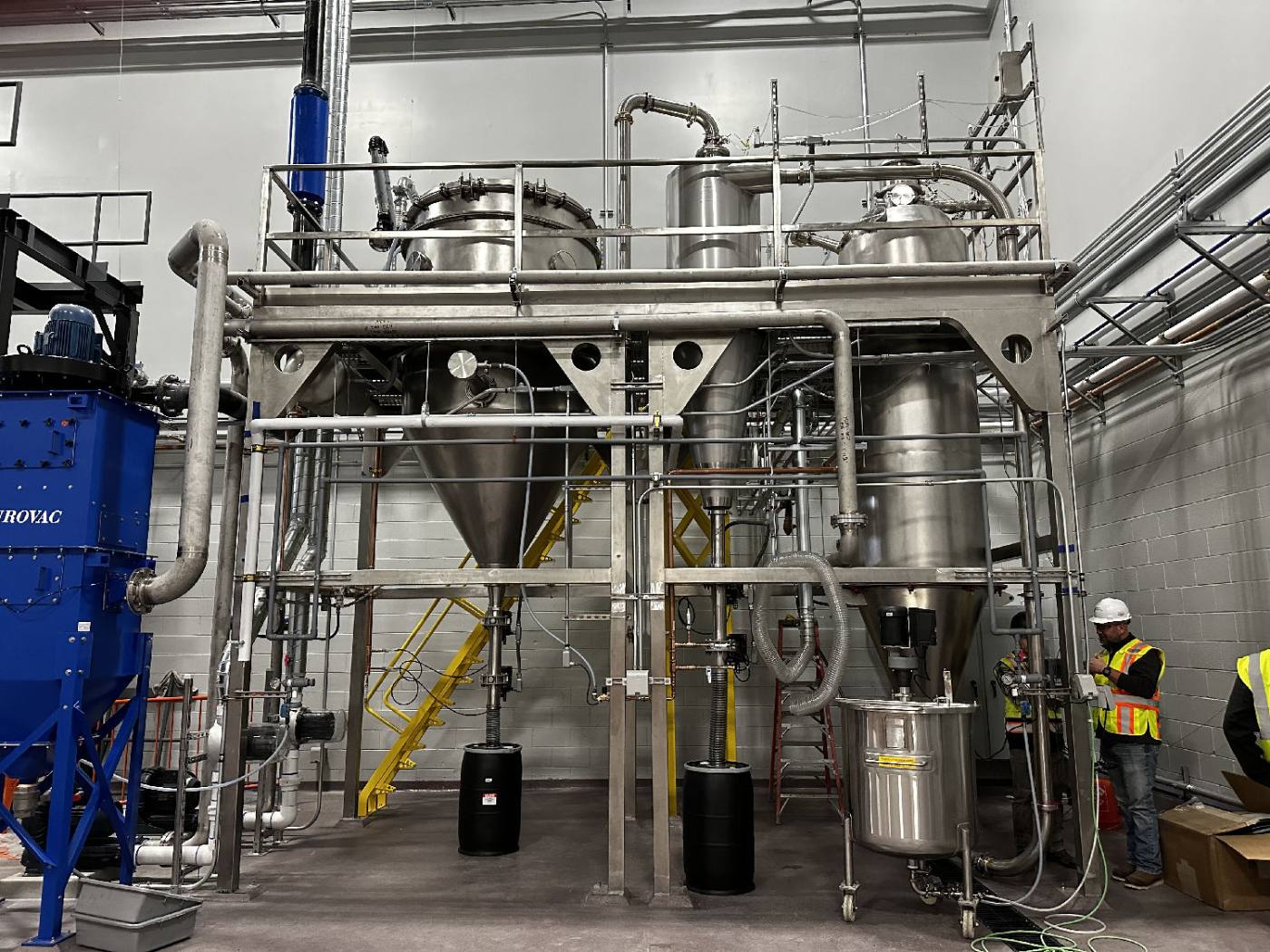
typical thermal energy per lb of powder, versus
conventional dryers
low maintenance time & effort — inexpensive,
off-the-shelf wear parts
Better powder,
for less energy in
Pulse dryers use gas-dynamic atomization
instead of a high-pressure pump and nozzle.
BTU/lb. Figures are per pound of water removed, drier-to-drier, at comparable feed conditions.
Pulse Drying Systems reports in BTU/lb across every market, including Europe.
Every percent increase in solids
is an energy line item
Pulse atomization handles significantly higher feed viscosities (up to 5,000 cP) and solids
loads. Concentrating feedstock upstream minimizes the water burden in the drying
chamber, directly cutting thermal energy demands while boosting throughput.
Increasing feed solids from 25% to 50% reduces the required water evaporation
from 3 lbs of water per pound of powder down to 1 lb. This 67% drop in thermal
load cuts specific energy consumption per unit of product by roughly
two-thirds while tripling hourly production capacity.
A straight tube, not a
high-pressure nozzle
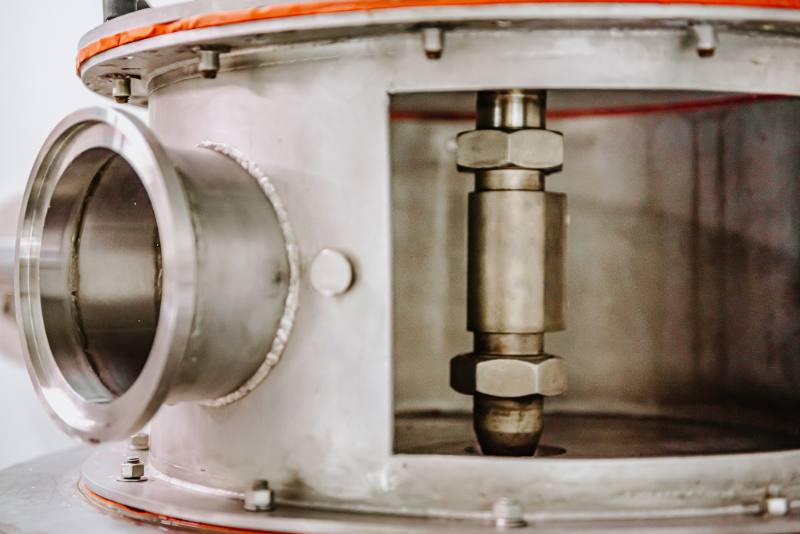
Conventional spray dryers force the feed through a tiny
nozzle at high pressure. Pulse dryers atomize with a
high-velocity hot gas stream through an open,
unrestricted tube — which is where most of the
downstream advantages start.
| Feature / Metric | Open Tube Atomizer (PASD)Low-pressure feed · open tube | Conventional Pressure NozzleHigh-pressure pump · narrow orifice |
|---|---|---|
| Feed line pressure | Low pressure (~1 psi) | High pressure (up to 5,000 psi) |
| High-pressure pump | Up to 5,000 psi | Required (up to 5,000 psi; requires frequent and expensive maintenance) |
| Solids / viscosity limit | Small orifices and high-speed parts; clogging, abrasion, corrosion | Typically limited to 15–25% solids and ~200–300 cP before clogging |
| Typical repair / maintenance time | 15–30 s, “warm and wet” throughout | High maintenance; can require pump overhauls every 2 weeks and frequent nozzle changes |
| Handles abrasives / corrosives | Moderate | Poor (rapid orifice erosion/corrosion leading to out-of-spec powder) |
Fewer sources of emissions.
Fewer parts wearing out.
Pulse atomization handles significantly higher feed viscosities (up to 5,000 cP) and solids
loads. Concentrating feedstock upstream minimizes the water burden in the drying
chamber, directly cutting thermal energy demands while boosting throughput.
Combustion contaminants kept
out of the product
Preventing combustion contaminants (like NOx or CO) from touching
the product stream by switching from direct combustion to indirect
gas or electric heat.
An unrestricted feed line means
fewer parts to replace
No high-pressure pump and no narrow orifice to erode means fewer
wear parts and less downtime spent waiting on them.
Precision-built, and proven
before you scale
Every Pulse dryer is custom-fabricated in stainless steel to strict industrial standards. Before scaling up, feed
formulations and drying parameters are tested and verified in our Mesa, Arizona R&D laboratory.