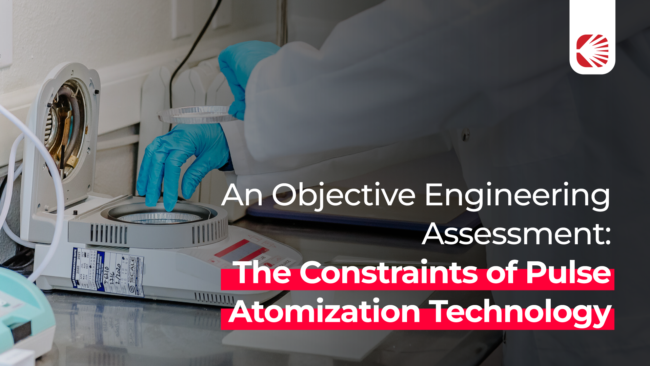
An Objective Engineering Assessment: The Constraints of Pulse Atomization Technology

In process engineering, every technology choice involves a series of trade-offs between performance, scalability, and operational requirements. While Pulse Atomization Spray Drying (PASD) offers significant advantages in thermal efficiency and powder quality, it is not a universal solution for every industrial application. To provide a transparent technical evaluation, we must address the specific areas where PASD faces limitations compared to conventional spray drying.
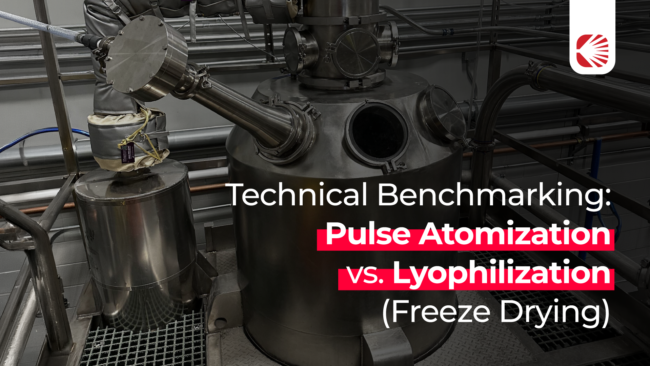

Technical Benchmarking: Pulse Atomization vs. Lyophilization (Freeze Drying)

For heat-sensitive biologicals and high-value food ingredients, lyophilization (freeze drying) has long been the industry benchmark for preserving molecular integrity and volatile profiles. However, the process is inherently constrained by its thermodynamic requirements, leading to high capital expenditure and low production rates. Pulse Atomization Spray Drying (PASD) offers a continuous alternative that, for specific applications, can match the quality output of a freeze dryer while significantly improving operational economics.

Engineering Analysis: Managing Abrasive Slurries in Chemical and Mineral Spray Drying

For process engineers handling minerals and specialty chemicals, the primary challenge of conventional spray drying is the aggressive nature of the feed material. Abrasive slurries introduce significant mechanical stress to atomization hardware, necessitating a technical comparison between traditional rotary or pressure nozzle systems and Pulse Atomization Spray Drying (PASD).

Technical Evaluation: Pulse Atomization vs. Lyophilization and Conventional Spray Drying for Labile Pharmaceuticals

In the pharmaceutical industry, product quality, defined as the delivery of uncontaminated, non-degraded, and biologically active medicines, is the primary engineering objective. For heat-sensitive materials such as proteins, vaccines, and therapeutic enzymes, the selection of a drying technology involves a critical trade-off between preserving molecular integrity and operational throughput.

Process Engineering Analysis: 5-Year Operating Cost and Savings Profile

In industrial spray drying, the Total Cost of Ownership (TCO) is dictated more by recurring operational expenses than by initial capital outlay. When comparing Pulse Atomization Spray Drying (PASD) to conventional mechanical atomization over a five-year horizon, three primary variables drive the annual savings estimate: thermal efficiency, maintenance requirements, and the impact of feed concentration on throughput.

Comparative Energy Consumption in Spray Drying: Evaluating Thermal Efficiency and High Inlet Temperatures

In industrial drying, evaluating energy consumption requires a comprehensive audit of both thermal requirements and the electrical load of the pressure blower, transportation air blower, and exhaust fan. Conventional spray dryers utilize high-pressure pumps to achieve atomization, whereas Pulse systems rely on a gas-dynamic atomizer that operates at significantly lower feed pressures. The primary engineering advantage of Pulse Atomization Spray Drying (PASD) is the superior efficiency of heat utilization during the evaporation cycle.

Thermodynamic Analysis: Thermal Efficiency in Pulse Atomization vs. Conventional Spray Drying

In industrial spray drying, thermal efficiency is fundamentally driven by the “Delta T”—the temperature differential between the inlet drying air and the outlet exhaust. Pulse Atomization Spray Drying (PASD) achieves superior efficiency by using a gas-dynamic atomization zone in which hot air and atomized liquid meet at the same point in space and time. This allows PASD systems to operate with inlet temperatures as high as 1,000°F against a 200°F outlet, resulting in an 800°F Delta T, whereas traditional dryers are often limited to a 300°F or 400°F Delta T to avoid product degradation. This increased driving force can reduce theoretical air consumption by 300% to 400% depending on the material.

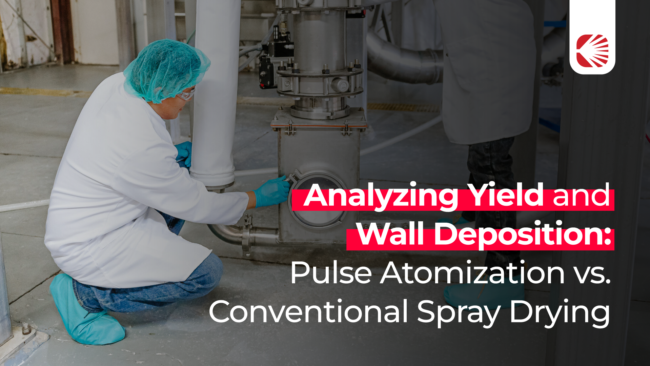
Analyzing Yield and Wall Deposition: Pulse Atomization vs. Conventional Spray Drying

In industrial drying operations, yield is defined as the ratio of the dry matter introduced to the system versus the amount successfully collected at the cyclone. While mechanical settings such as inlet and outlet temperatures influence this metric, formulation is the primary determinant of whether a material will dry into a consistent powder or adhere to the chamber walls. From an engineering standpoint, any material that can be spray-dried with high yield can achieve equivalent or superior recovery rates using Pulse Atomization Spray Drying (PASD).

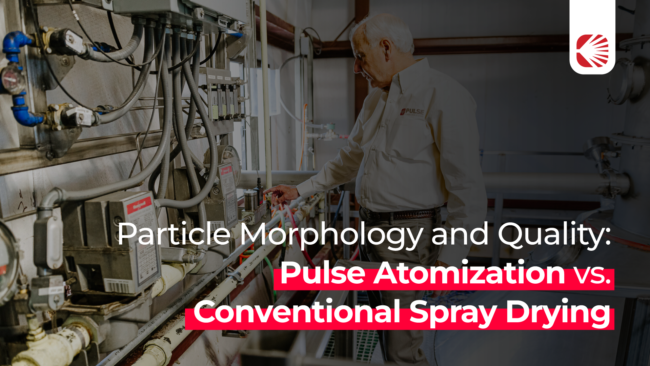
Particle Morphology and Quality: A Comparative Analysis of Pulse Atomization vs. Conventional Spray Drying

In the production of industrial powders, particle morphology and flowability are critical metrics that dictate a product’s commercial viability and ease of handling. However, because every material behaves differently depending on its unique chemical composition, concentration, and temperature requirements, these characteristics cannot be determined solely by theoretical models. To accurately assess the quality gap between Pulse Atomization Spray Drying (PASD) and conventional spray drying, a direct empirical comparison is necessary.