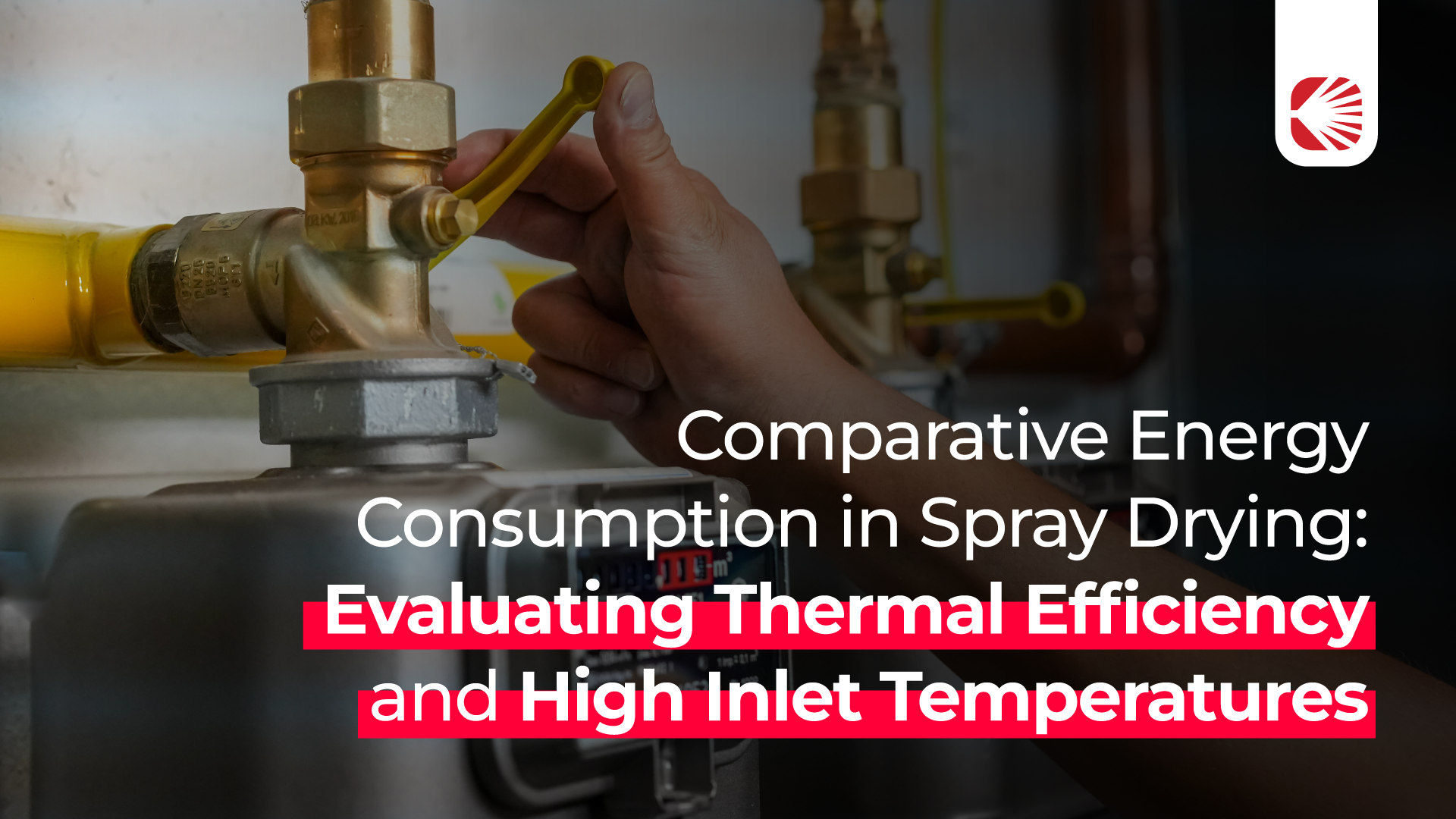
In industrial drying, evaluating energy consumption requires a comprehensive audit of both thermal requirements and the electrical load of the pressure blower, transportation air blower, and exhaust fan. Conventional spray dryers utilize high-pressure pumps to achieve atomization, whereas Pulse systems rely on a gas-dynamic atomizer that operates at significantly lower feed pressures. The primary engineering advantage of Pulse Atomization Spray Drying (PASD) is the superior efficiency of heat utilization during the evaporation cycle.
Thermal Efficiency and the Delta T Advantage
Thermal efficiency in spray drying is fundamentally driven by the “Delta T”—the temperature differential between the inlet drying air and the outlet exhaust (reference). PASD systems can utilize inlet temperatures ranging from 700°F to over 1,000°F while maintaining outlet temperatures between 145°F and 250°F. This high driving force allows for a reduction in theoretical air consumption by 300% to 400% compared to steady-flow systems. Conversely, conventional food-grade spray dryers are often capped at lower inlet temperatures to prevent product scorching, which inherently limits their thermal efficiency.
Comparative Metrics: kJ/kg of Water Evaporated
Empirical data from pilot trials highlights the energy performance gap between these technologies:
- Pulse Atomization (PASD): Documented energy consumption for sensitive materials like egg white is approximately 2,604 kJ per kilogram of water evaporated.
- Conventional Spray Drying (SD): Standard industrial systems typically range from 4,500 to 6,500 kJ per kilogram.
This data indicates that PASD can achieve a thermal baseline that is significantly lower than traditional counterparts, often operating at 45% to 67% efficiency compared to the 20% to 40% range seen in varied conventional designs.
Electrical Load and Process Intensification
The total energy required to produce a pound of powder also depends on the feed’s solids content. Conventional systems are restricted by a “viscosity ceiling” at the nozzle, frequently requiring feed dilution to prevent clogging. PASD utilizes an “open pipe” feed system that handles viscous slurries up to 5,000 cP, allowing for higher-solids processing. By doubling the solids concentration, say from 25% to 50%, a facility can reduce the total water removal requirement by two-thirds, dramatically lowering the total energy cost per finished pound.
Are you looking to optimize your production efficiency or reduce your energy cost per finished pound? The most effective way to validate these performance metrics for your specific material is through a technical feasibility study. Contact our technical team today to discuss your material’s drying kinetics and evaluate your potential ROI.