pulseDry_BlogEC_Sep_13

Mechanics of Component Degradation: The Impact of Abrasive Slurries on Atomization Performance

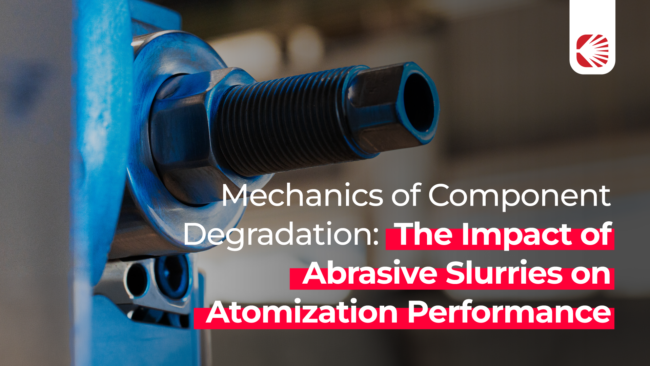
In industrial spray drying, the processing of abrasive or corrosive feed materials presents a fundamental challenge to the longevity and performance of traditional rotary and nozzle atomization hardware. Every conventional system, whether utilizing a high-speed rotary disc or a pressure nozzle, begins its operational cycle with new components, including the atomizer head and the feed pump. However, the physics of high-pressure delivery ensures that these components begin to degrade immediately upon contact with aggressive feedstocks.

pulseDry_BlogEC_Sep_12

Engineering Alternatives for Harsh Material Atomization

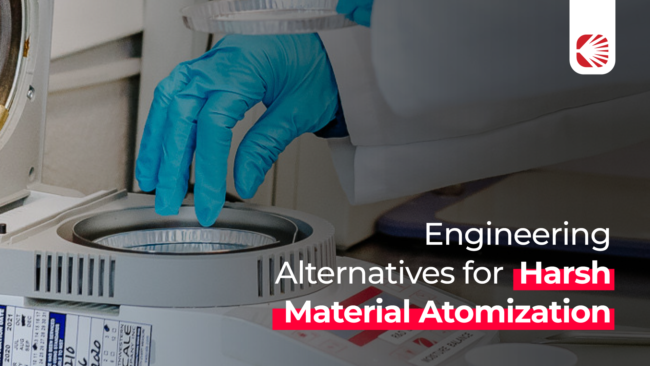
Conventional spray drying of abrasive or corrosive materials typically relies on high-pressure pumps—often reaching 5,000 psi—and restricted spray nozzles. These mechanical components are prone to rapid erosion and chemical degradation, leading to frequent maintenance cycles and inconsistent spray patterns. For process engineers, Pulse Atomization Spray Drying (PASD) provides an alternative mechanism that eliminates the fundamental dependence on high fluid pressure and restricted orifices.

pulseDry_BlogEC_Sep_11

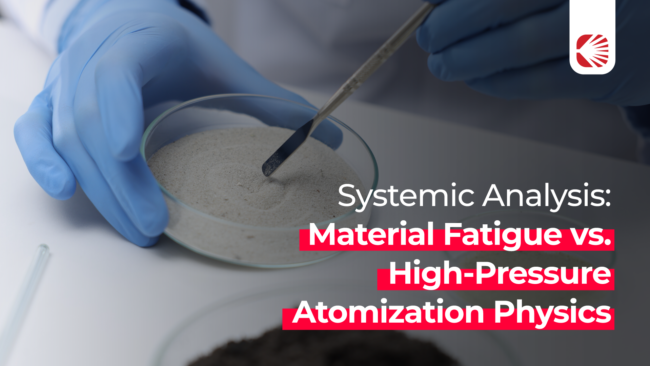
Systemic Analysis: Material Fatigue vs. High-Pressure Atomization Physics

In the processing of abrasive or corrosive slurries, facilities often face a recurring cycle of nozzle erosion and pump failure. When components degrade rapidly, the standard engineering response is to specify harder materials, such as tungsten carbide or advanced ceramics, or to install pumps designed for higher wear resistance. However, technical data suggests that the root cause of these failures is often not the material of the components themselves, but rather a fundamental dependence on high-pressure atomization.

pulseDry_BlogEC_Sep_10

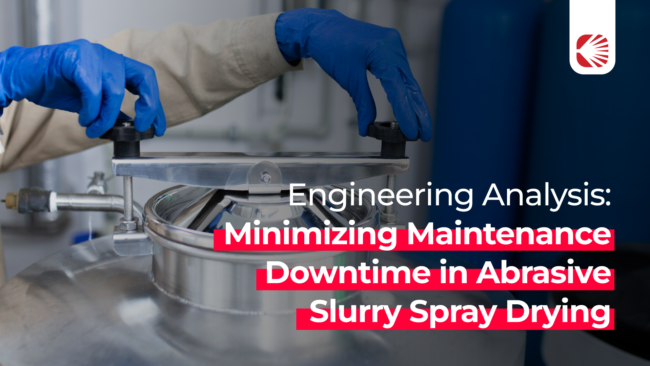
Engineering Analysis: Minimizing Maintenance Downtime in Abrasive Slurry Spray Drying

In industrial spray drying, the processing of abrasive slurries often creates a significant operational bottleneck. For facilities utilizing traditional spray drying technology, frequent maintenance shutdowns are often accepted as an unavoidable cost of doing business. However, a technical evaluation of the underlying mechanics suggests that these disruptions are not a result of the material itself, but rather a consequence of the atomization method employed.

pulseDry_BlogEC_Sep_9

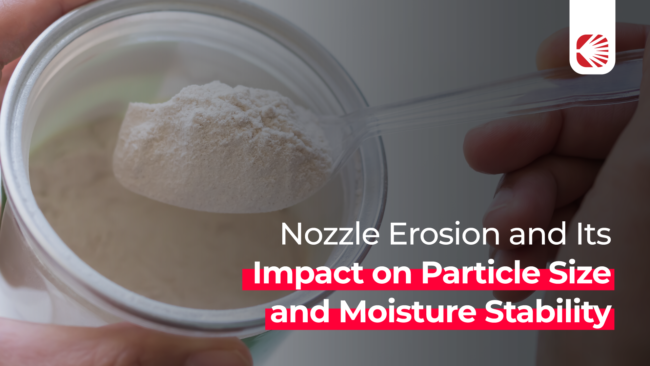
Nozzle Erosion and Its Impact on Particle Size and Moisture Stability

Mechanical nozzle erosion is a progressive failure mode in conventional spray drying systems that utilize high-pressure atomization. As abrasive or corrosive feed materials pass through a precision-machined nozzle orifice, the opening gradually enlarges beyond its intended diameter. In traditional systems, which often operate at pressures reaching 5,000 psi, the high-pressure pump must compensate for this wear by working harder to maintain the target process pressure.

pulseDry_BlogEC_Sep_8

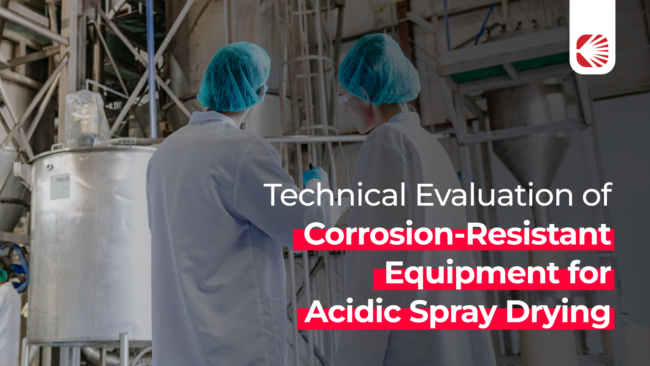
Technical Evaluation of Corrosion-Resistant Equipment for Acidic Spray Drying

In industrial spray drying, managing corrosive chemicals and acidic formulations requires addressing two primary mechanical failure points: the atomizer nozzle and the feed pump. Traditional systems often utilize specialty alloy nozzles designed for corrosion resistance. However, these components are frequently expensive and may only delay, rather than eliminate, the degradation caused by 24/7 exposure to aggressive materials.

pulseDry_BlogEC_Sep_7

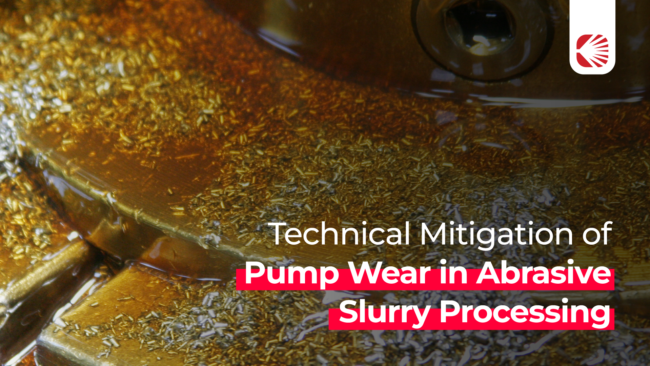
Technical Mitigation of Pump Wear in Abrasive Slurry Processing

For process engineers handling minerals or ceramic slurries, pump and nozzle wear represent significant operational hurdles that often defy traditional correction. In conventional spray drying, the physics of the process require high-pressure pumps to force abrasive material through a restricted nozzle orifice, typically at pressures up to 5,000 psi. This high-velocity contact between abrasive particles and mechanical components makes erosion a physical inevitability.

pulseDry_BlogEC_Sep_6

Technical Evaluation of Nozzle Materials and Atomization Strategy for Abrasive Slurry Processing

In industrial spray drying, the processing of abrasive mineral or ceramic slurries presents a significant engineering challenge regarding component longevity and process stability. Traditionally, engineers look to advanced material science—specifically tungsten carbide, ceramics, and specialty alloys—to mitigate the rapid erosion of atomization components.

pulseDry_BlogEC_Sep_5

Technical Analysis of Nozzle Erosion in Abrasive Slurry Processing: Traditional vs. Gas-Dynamic Atomization

In industrial spray drying, abrasive slurries present a significant mechanical challenge to conventional hardware due to the fundamental dependence on high-pressure atomization. Traditional systems achieve atomization by forcing feed through a restricted nozzle orifice, typically at pressures reaching 5,000 psi. This mechanical process results in continuous erosion of the nozzle, which increases the orifice diameter and alters the spray pattern over time.

pulseDry_BlogEC_Sep_4

Comparative Analysis: Drying Technologies for High-Value Food and Flavorings

In the food and nutraceutical industries, selecting a drying technology is a critical engineering decision that hinges on a fundamental trade-off: maintaining the highest possible powder quality while managing operational costs and throughput. For products like dairy, coffee, and flavorings, where volatile retention and bioactivity are paramount, manufacturers generally choose among three primary methods: traditional spray drying, freeze-drying, and Pulse Atomization Spray Drying (PASD).