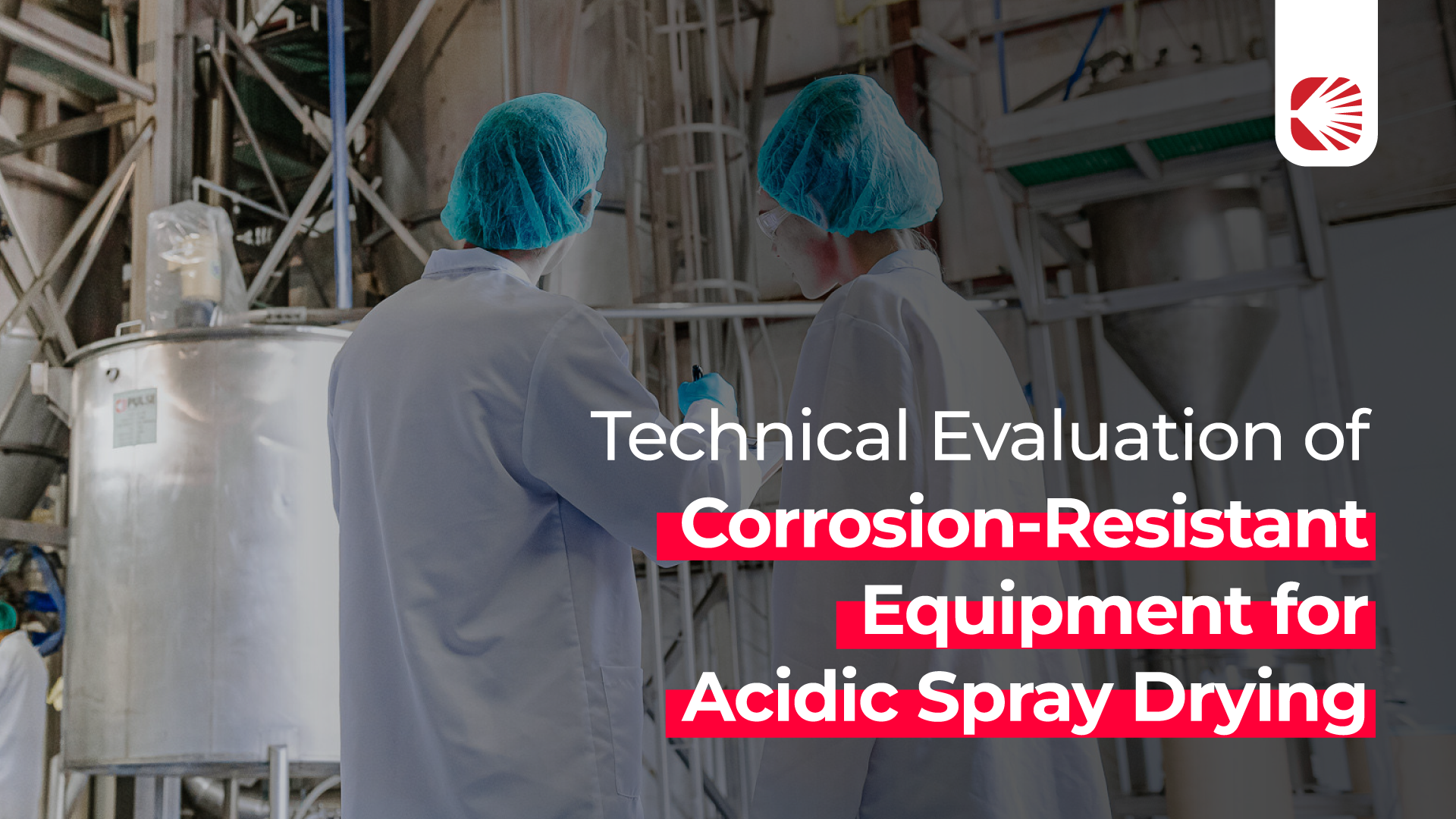
In industrial spray drying, managing corrosive chemicals and acidic formulations requires addressing two primary mechanical failure points: the atomizer nozzle and the feed pump. Traditional systems often utilize specialty alloy nozzles designed for corrosion resistance. However, these components are frequently expensive and may only delay, rather than eliminate, the degradation caused by 24/7 exposure to aggressive materials.
The High-Pressure Corrosion Challenge
Conventional pressure nozzle systems rely on high-pressure pumps (up to 5,000 psi) to force the feed through restricted orifices. When handling corrosive fluids, this high-pressure environment accelerates internal damage to pump seals and valves, necessitating frequent overhauls or complete replacements. Because the atomization physics depend on fluid pressure, the nozzle must maintain a precise, small diameter, making even minor corrosive wear detrimental to the spray pattern kinetics.
Gas-Dynamic Atomization and Inert Materials
Pulse Atomization Spray Drying (PASD) offers an alternative equipment design that utilizes gas-dynamic technology for atomization. This system operates at low pressure (~1 psi) and delivers the liquid through a straight, open tube into a high-velocity gas stream.
Because there is no pressure within the nozzle assembly, the feed tube can be constructed from materials that are entirely chemically inert, such as ceramics. Ceramic feed tubes in a PASD system can provide an indefinite service life because they are virtually unaffected by the corrosive agents that destroy metal nozzles.
Operational Economics and Maintenance
From an operational perspective, PASD systems typically employ peristaltic pumps with replaceable plastic feed tubes. This allows engineers to select inexpensive tubing—often costing approximately $50 to $200—that is specifically compatible with the acidic nature of the formulation. If the material is highly corrosive, the tube is simply replaced as a standard consumable, protecting the pump’s mechanical integrity.
Beyond corrosion resistance, PASD provides a residence time of 0.5 to 1.0 seconds and a thermal efficiency of 1,500 – 2,500 BTU per pound of water removed. The open-tube technology relies on the kinetic energy of the process air for droplet formation.
Are you looking to eliminate the high costs of nozzle corrosion and pump overhauls in your process? The most effective way to validate the longevity of ceramic or plastic feed systems for your specific formulation is through a technical feasibility assessment. Contact our engineering team today to discuss your material’s chemistry and evaluate your potential maintenance savings.