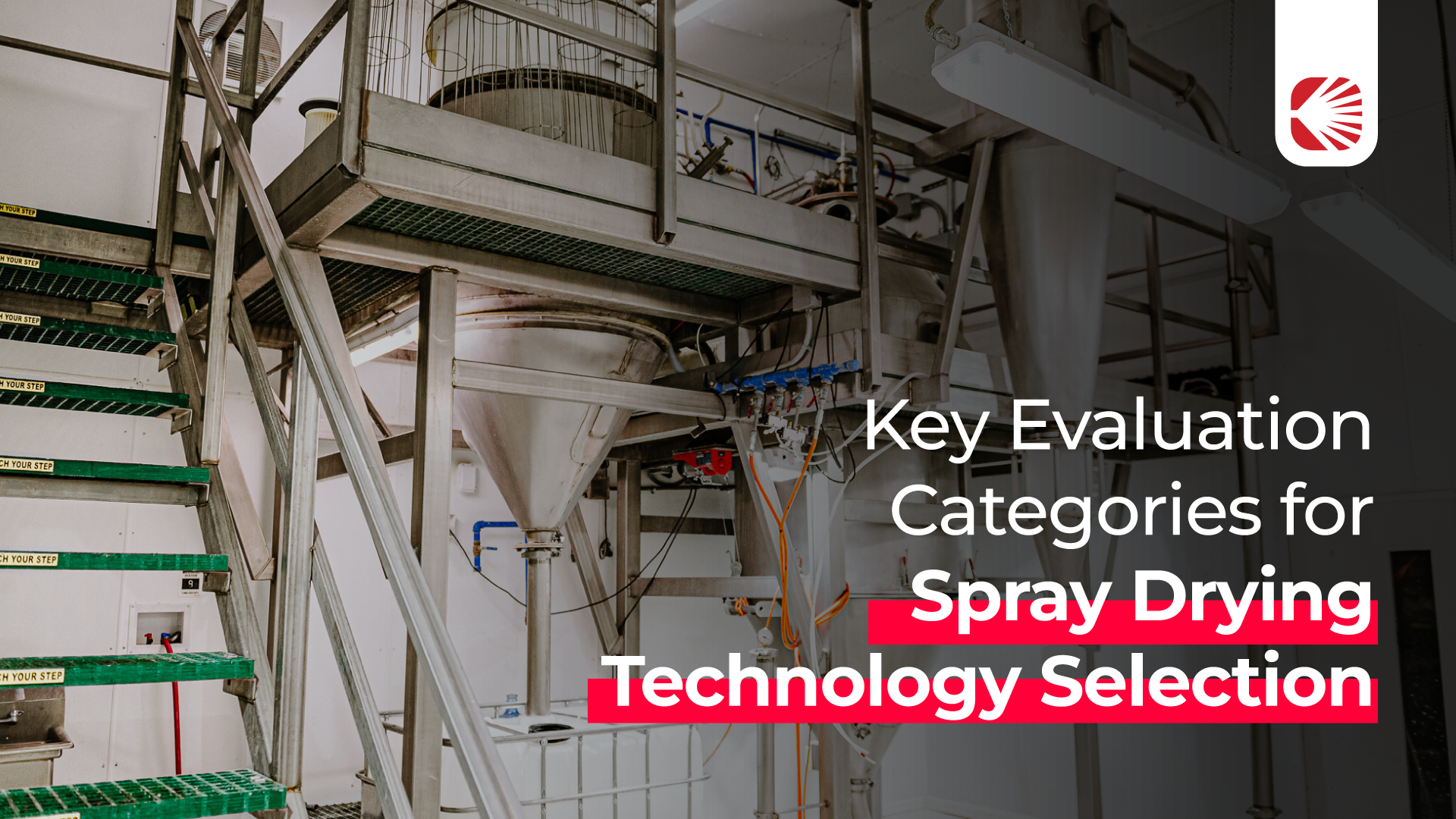
The transition from pilot to production requires a standardized framework for comparing competing drying technologies. Selecting the appropriate system is a high-stakes decision that dictates both product viability and long-term operational costs. To facilitate an objective assessment, it’s recommended to evaluate technologies across critical categories: powder quality, demonstration capabilities, operational scale, cost, and vendor support.
1. Powder Quality: The Primary Metric
For the majority of engineering teams, powder quality is the most critical factor in the selection process. A technical comparison must determine if a technology can consistently meet specifications for particle size distribution, moisture content, and morphology. Because different atomization methods—such as rotary disks, pressure nozzles, or gas-dynamic atomization—produce varied results, engineers should prioritize the specific quality requirements of their end-use application.
2. Verification Through Demonstration Tests
Theoretical performance data is rarely sufficient for industrial greenlighting. It is essential to conduct rigorous demonstration tests with technology providers to verify that the proposed equipment can produce a suitable product from your specific feed material. These tests provide the empirical data necessary to evaluate quality attributes before a capital commitment is made.
3. Operational Scale and Requirements
Once product quality is verified, the evaluation must shift to the mechanical and operational fit. Key questions include:
- Size Range: Does the technology provider offer a dryer size range that matches your current and future throughput requirements?.
- Scaling Dynamics: Is the scaling from pilot data to production linear, or does the process require significant adjustment as feed volume increases?.
4. Capital Cost and Lead Times
A transparent comparison requires a clear understanding of the initial capital investment and the timeline for implementation.
- Capital Cost: Evaluation should include the total cost of the drying system and its peripheral components.
- Lead Time: Engineers must account for the time required for manufacturing, installation, and commissioning, as these factors significantly impact project ROI.
5. Vendor Support and Technical Expertise
The final category concerns the long-term relationship with the equipment provider. It is important to assess what level of ongoing support a customer can expect after the dryer is installed. This includes access to technical experts for troubleshooting, availability of replacement parts, and assistance with introducing new formulations into the system.
Conclusion
Standardizing your evaluation around these categories ensures a comprehensive, unbiased comparison. By focusing on verified powder quality and the equipment’s mechanical realities, engineering teams can mitigate the risks inherent in technology adoption and ensure a stable production environment.
Are you ready to compare technology performance with your specific material? The most reliable way to evaluate these categories is through actual production data. Contact our engineering team today to schedule a pilot trial and see the results for yourself.