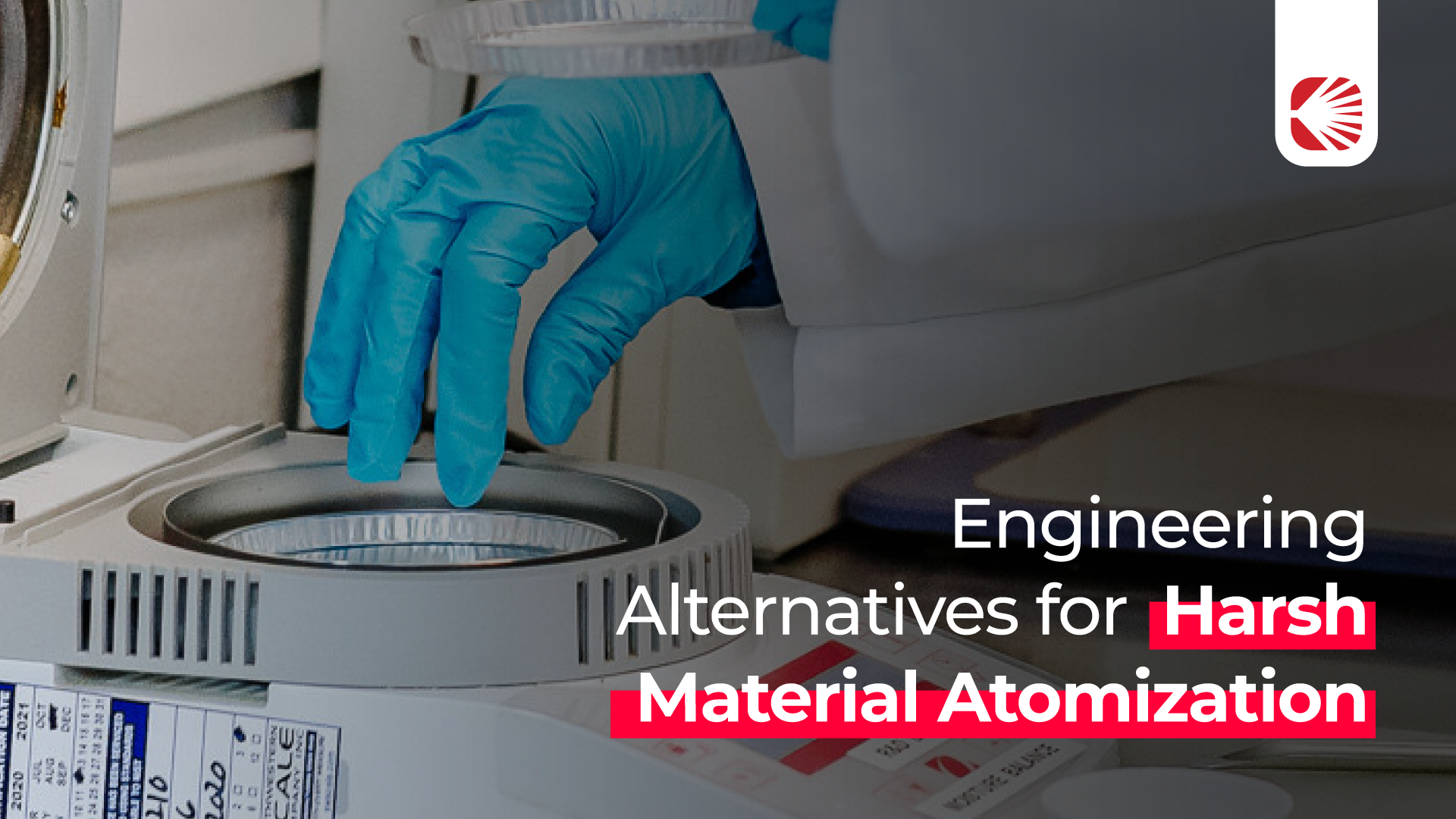
Conventional spray drying of abrasive or corrosive materials typically relies on high-pressure pumps—often reaching 5,000 psi—and restricted spray nozzles. These mechanical components are prone to rapid erosion and chemical degradation, leading to frequent maintenance cycles and inconsistent spray patterns. For process engineers, Pulse Atomization Spray Drying (PASD) provides an alternative mechanism that eliminates the fundamental dependence on high fluid pressure and restricted orifices.
Mechanical Evolution: Low-Pressure Delivery
The primary distinction in this approach is the replacement of expensive, high-maintenance high-pressure pumps with low-pressure peristaltic units. In a PASD system, the feed operates in a low-pressure environment (~1 psi), where the liquid is moved through a flexible tube. Maintenance for this delivery system is simplified to the periodic replacement of the tube, which typically costs approximately $50 – $200 and requires only ten minutes to install. This configuration effectively minimizes production downtime.
Atomization Without Restrictions
Instead of forcing feed through a narrow nozzle orifice that wears away over time, PASD utilizes a straight, vertical “open pipe” for liquid delivery. Because the feed flows directly through a pipe with no internal restrictions, it is not subject to the same mechanisms of abrasion or corrosion found in conventional pressure nozzles. For exceptionally aggressive chemical environments, these delivery tubes can be constructed from ceramic to provide a nearly indefinite service life.
The energy required for droplet formation is derived from the kinetic energy of a high-velocity gas stream rather than fluid pressure. This allows the system to process viscous slurries up to 5,000 cP and high-solids feeds up to 50-75% that would otherwise clog traditional atomizers.
Are you ready to evaluate how an open-pipe system handles your most challenging formulations? The most effective way to determine the impact on your uptime and maintenance costs is through a technical discussion of your material kinetics. Contact our engineering team today to review your specifications and discuss a feasibility assessment.