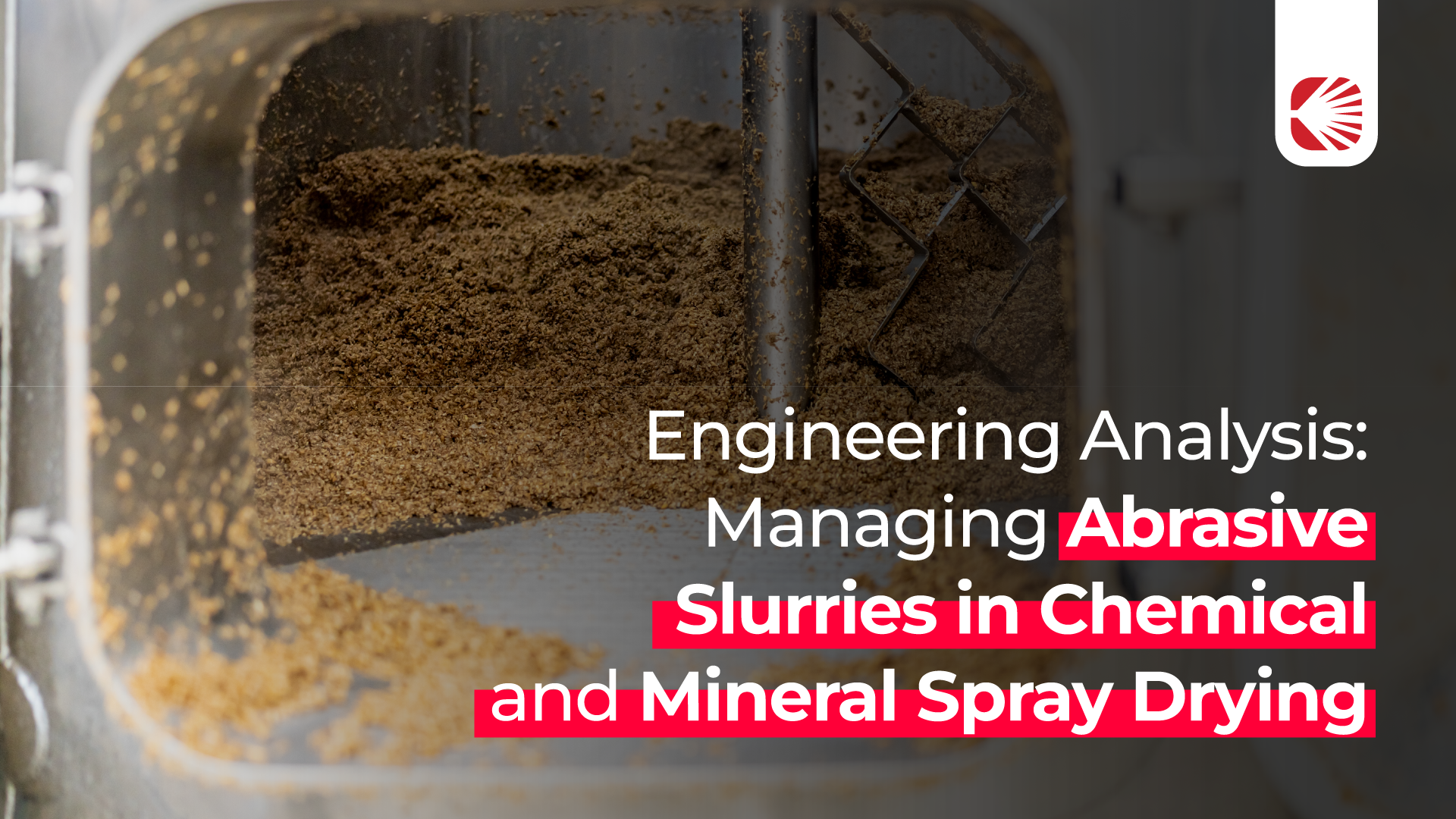
For process engineers handling minerals and specialty chemicals, the primary challenge of conventional spray drying is the aggressive nature of the feed material. Abrasive slurries introduce significant mechanical stress to atomization hardware, necessitating a technical comparison between traditional rotary or pressure nozzle systems and Pulse Atomization Spray Drying (PASD).
Addressing Mechanical Wear and Maintenance
In a traditional spray dryer, atomization is achieved through high-speed rotary disks or high-pressure pumps forcing liquid through a tiny nozzle orifice. This is inherently susceptible to erosion when processing minerals. As abrasive particles contact these high-velocity or high-pressure components, they cause dramatic wear, leading to high maintenance costs and frequent production shutdowns for equipment replacement.
PASD utilizes “gas-dynamic” atomization, which fundamentally alters the mechanical requirements of the system. Instead of relying on high-pressure pumps or high-speed moving parts, PASD delivers the liquid through a low-pressure, straight “open pipe” with no internal restrictions. For exceptionally abrasive materials, these feed tubes can be constructed from ceramic, which is virtually immune to the erosion that destroys metal pressure nozzles. Furthermore, because the system operates at low pressure—often using plastic pumps that are unaffected by abrasion—the frequency and cost of replacing worn parts are significantly lower than in conventional systems.
Particle Size Control and Distribution Drift
Beyond maintenance, mechanical wear directly impacts product quality. In rotary or nozzle-based systems, as the disk erodes or the orifice enlarges, the dynamics of atomization change. This results in “distribution drift,” where the particle size and moisture profile of the powder become inconsistent over time.
Because PASD has no precision parts to wear out in the atomization zone, the energy delivered to the liquid stream remains constant. Every droplet experiences the same atomization energy and differential temperature throughout the production run.
Operational Reliability
A comparison of the two technologies reveals a divergence in repair velocity. While repairing worn high-pressure pumps or overhauling a rotary drive unit can take days, the “open pipe” components of a Pulse system can often be serviced in less than an hour at a fraction of the cost. For facilities where uptime is critical, removing these high-pressure failure points provides a more stable production environment for harsh chemical and mineral formulations.
Are your maintenance costs and particle size drift impacting your operational ROI? Determining if gas-dynamic atomization can stabilize your production of abrasive materials requires empirical verification. Contact our technical team today to discuss a feasibility trial for your specific formulation.