Spray dryers are fundamental to modern food manufacturing, serving as the primary method for turning liquid ingredients into high-quality, stable powders. Using spray drying in food processing enables manufacturers to preserve essential characteristics of sensitive materials while streamlining logistical operations for a global market.
Use of advanced spray dryers allows food companies to produce standardized ingredients offering ease of storage, lower transportation costs, and high functional performance. This technology is critical for maintaining consistency in flavor, nutrition, and texture across a wide range of consumer products. It provides a reliable pathway to turn perishable liquids into shelf stable assets for a brand’s inventory.
What is spray drying used for in food processing?
Spray drying is primarily utilized for shelf-life extension, volume reduction, and precision standardization of ingredients. Its strategic deployment reduces water activity levels, which helps limit microbial growth – therefore preventing spoilage and enzymatic degradation. By removing water, manufacturers create an environment where most spoilage organisms cannot thrive.
Utilization of spray drying in the food industry reduces the weight and volume of water, leading to meaningful savings in storage and shipping costs. It ensures manufacturers can provide ingredients that are easy for end-users to handle, while offering rapid, consistent rehydration. This efficiency is vital for ingredients like milk or fruit extracts that would otherwise require expensive cold-chain logistics.
When evaluating what is spray drying used for in food processing, quality retention remains a top priority for manufacturers. The rapid nature of the process is designed to protect delicate flavor profiles and bioactive compounds that would otherwise be damaged by slower drying methods such as drum drying. By providing a fine powder with high surface area, the technology ensures a superior user experience during dry mixing and rehydration.
What is the food spray drying process?
The spray drying process for food follows a sequence of feed preparation, pasteurization, homogenization, atomization, drying, and collection. It is highly efficient, often exposing food particles to the drying medium for 15-30 seconds to ensure safety and quality. This rapid transition is key to preserving heat-sensitive nutritional components.
Implementing a modern food spray drying process requires strict adherence to sanitary standards and temperature control. High-quality systems feature food-grade materials and HACCP compliance, often incorporating automated Clean-in-Place (CIP) and Sterilize-in-Place (SIP) systems to prevent cross-contamination. These features are essential for maintaining the high purity levels required in the global food supply chain.
Utilizing specialized spray dryers in food industry applications allows for maintenance of uniform conditions throughout the drying chamber. By avoiding localized overheating, these systems protect the integrity of the product while enabling efficient heat transfer within the drying process. Precision control over inlet and outlet temperatures ensures the final powder meets exact moisture and size specifications.
What are examples of spray drying in food processing?
Widespread examples of spray drying used in food processing include the production of infant formula, instant coffee, and specialized flavoring agents used in snacks and prepared meals. It is the gold standard for creating dairy powders such as skim milk and whey protein isolates, which require high solubility and nutritional stability. Spray drying technology allows these products to maintain their functional properties for months or even years.
Common food-grade applications include:
- Dairy and Alternatives: Skim and whole milk powders, non-dairy creamers, and plant-based protein powders.
- Beverages: Instant tea extracts, malted drinks, and fruit juice concentrates.
- Flavoring Agents: Microencapsulated aromatic oils, natural food colors, and concentrated seasonings.
- Specialty Ingredients: Egg powder, probiotics, and bioactive nutritional supplements.
Newer applications are also emerging in the plant-based protein sector, where spray drying helps stabilize proteins and flavors for meat alternatives. Probiotics, in particular, benefit from advanced drying techniques that maintain high cell viability after rehydration. This versatility allows manufacturers to meet evolving consumer demands for functional foods with high health benefits and appealing sensory properties.
What kind of foods can go through spray drying?
Generally, any material that can be prepared as a pumpable liquid, such as a slurry, emulsion, or solution, can undergo this drying method. While high-fat or sticky ingredients were once challenging to process, formulation improvements are expanding the list of suitable materials. If a material can be atomized into a fine mist, it can usually be dried into a powder.
Pulse Atomization technology is a key driver in this expansion, offering superior handling for heat-sensitive food formulations. By providing better droplet control and maintaining a consistent drying environment, this technology enables the processing of complex materials that traditional systems often struggle to dry. These systems operate within defined inlet temperature ranges depending on product formulation and equipment configuration.
Final Insights
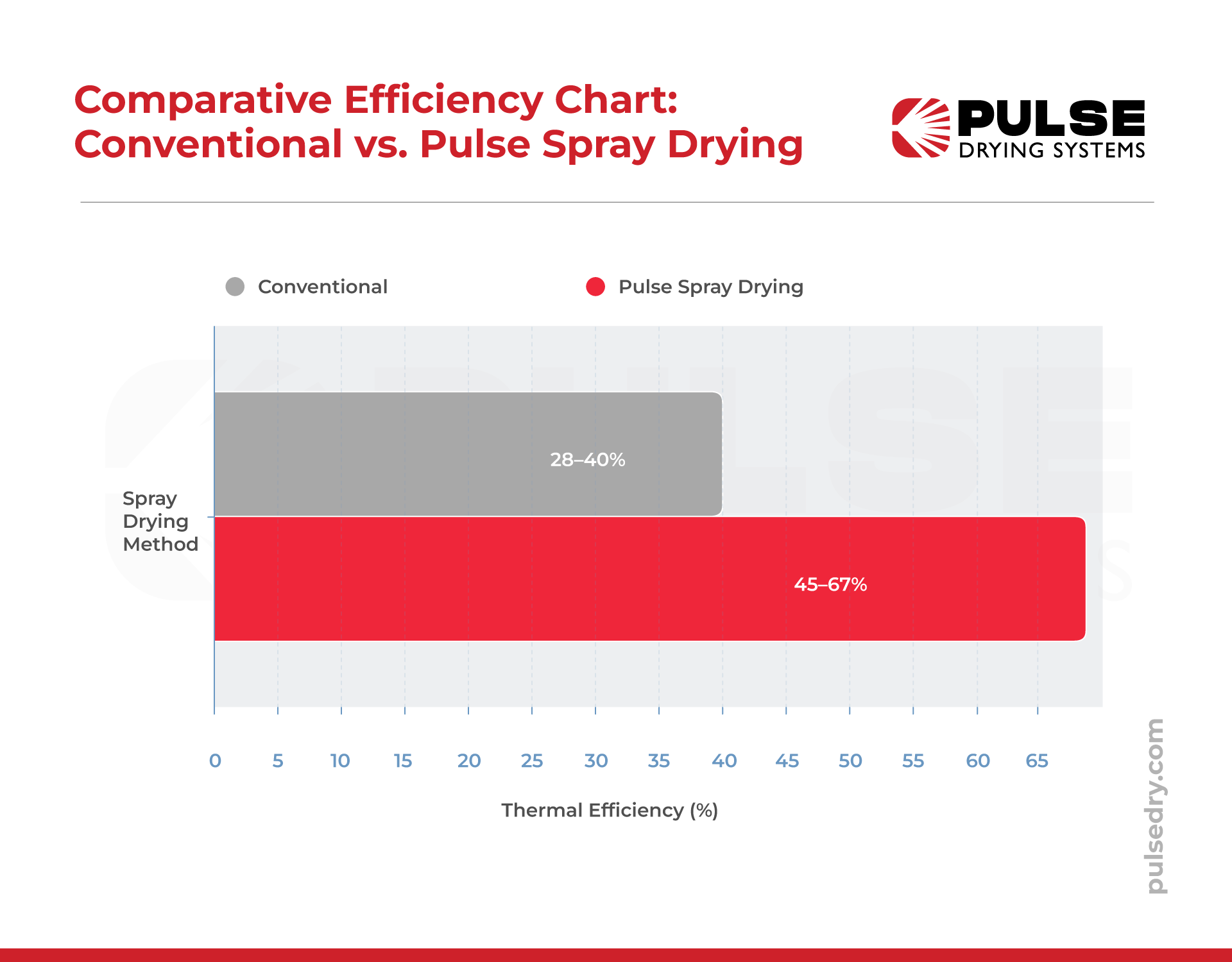
Operational efficiency is a major benefit of these advanced systems, with some drying configurations able to achieve higher thermal efficiency when compared to conventional systems. This allows processors to maintain superior quality while reducing energy costs and environmental impact. This efficiency advantage makes the technology viable for a broader range of price-sensitive food commodities.
Transform your food ingredients into high-quality powders with Pulse Drying Systems. Our food-grade spray dryers are designed to meet the strictest food safety standards while delivering superior product quality, consistent particle characteristics, and excellent retention of nutritional and sensory properties.
Whether you’re processing dairy, beverages, proteins, or specialty ingredients, our Pulse Atomization technology ensures optimal results. Contact our team to discuss your food processing needs and discover how pulse spray dryers can enhance your production capabilities.
The information in this article is provided for general educational purposes and to promote overall awareness. It is not intended as engineering, legal, or other professional advice, and should not be used in place of consultation with qualified professionals familiar with your specific application and conditions. This content should not be considered exhaustive.