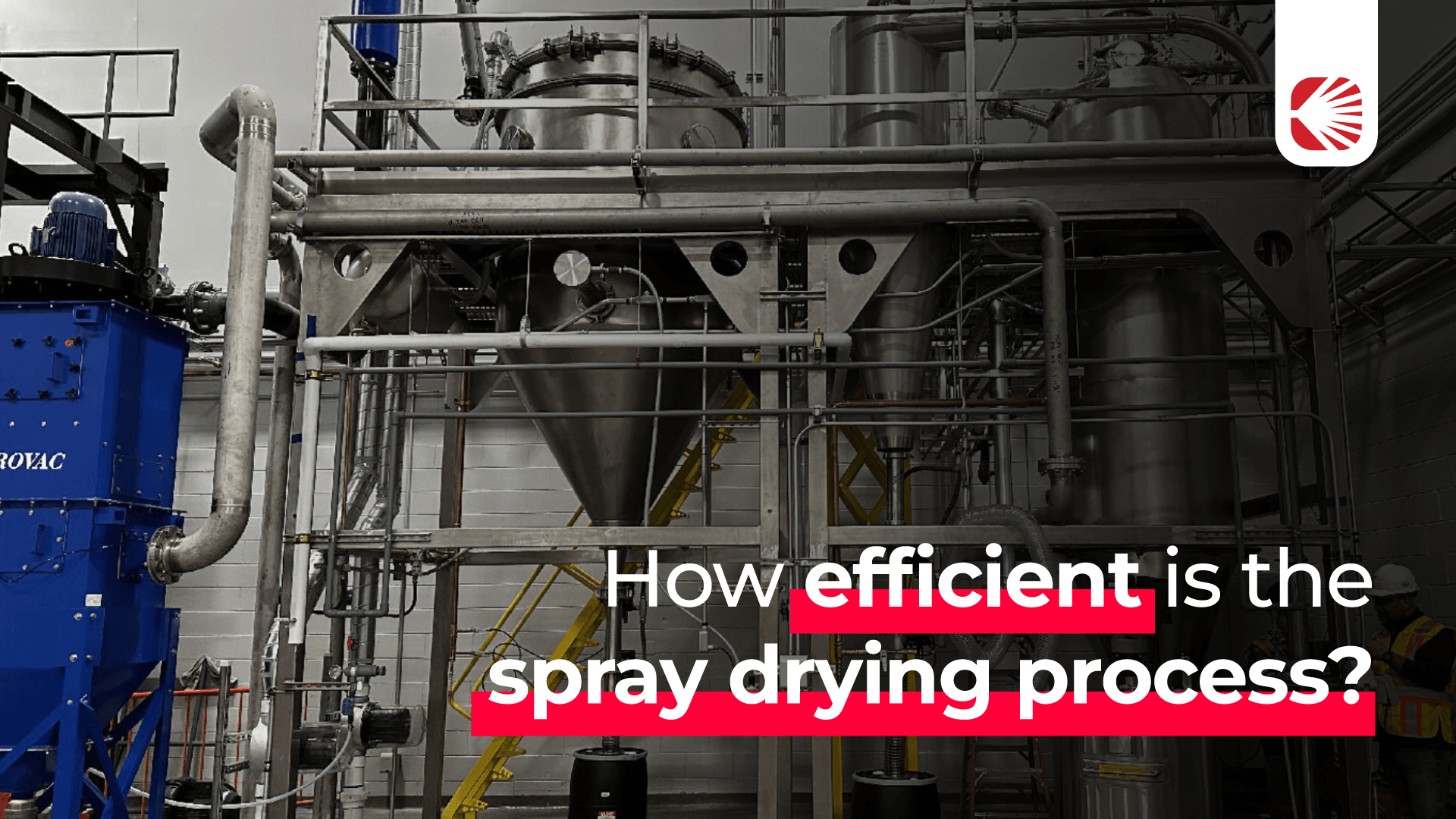
Evaluating spray drying efficiency is a top priority for manufacturers looking to optimize their production lines and improve their bottom line. Choosing the right spray dryers is not just about producing a powder; it is about doing so in a way that maximizes energy utilization and minimizes waste. While traditional drying methods have long been the industry standard, modern advancements are significantly raising the bar for what defines an efficient process.
What are the advantages of spray drying?
Numerous advantages of spray drying make it a preferred choice across the food, chemical, and pharmaceutical sectors. Chief among these spray drying advantages is its operation as a continuous, one-step process, allowing for rapid processing and high-volume scalability that batch-based methods cannot match. Unlike freeze drying, which can take hours or even days, spray drying transforms a liquid feed into a dry powder in just five to thirty seconds.
Beyond operational speed, spray drying offers many product quality benefits, including controlled particle size and uniform morphology. By atomizing the liquid feed into millions of microdroplets, the system dramatically increases the available surface area for evaporation. This allows for the production of free-flowing powders with consistent moisture content and high solubility, which are essential for high-performance applications.
Is spray drying cost-effective?
When organizations ask, “Is spray drying cost-effective?”, the answer primarily depends on the specific technology employed and the total cost of ownership. While the initial capital investment for a high-quality drying system can be significant, the long-term ROI is driven by high throughput, lower labor costs, and energy efficiency. When compared to alternative methods like freeze drying—which is energy-intensive and slow—spray drying is often considered a more economical option for large-scale production when compared with slower drying methods.
Energy consumption and operating labor are the primary drivers of operating costs. Traditional spray drying systems operate at relatively low thermal efficiency compared to newer drying technologies. For example, Pulse Atomization Spray Drying technology has changed this economic calculation by significantly reducing energy consumption. Advanced pulse systems have achieved a higher energy efficiency of less than 2,000 BTU per pound of water evaporated, which translates to a much lower cost per finished pound of product and a faster path to profitability.
What factors affect spray drying efficiency?
Several critical metrics define the overall performance of the drying cycle, including the thermal efficiency, evaporation rate, and final product yield. The primary factor impacting these metrics is the differential between the inlet and outlet temperatures. A larger temperature differential will improve energy utilization, provided the material can tolerate the associated thermal exposure. The short residence times provided by Pulse Atomization Spray Dryers greatly reduce thermal exposure.
The atomization method also plays a vital role in efficiency. Traditional mechanical nozzles or rotary disks are often related to “hot spots” in the dryer that can lead to thermal degradation or scorching.. In contrast, Pulse Atomizing Spray Dryers utilize high-velocity pulsating jets that intensify heat and mass transfer rates compared to steady-state systems, and eliminate the hot spots.
Other factors affecting spray drying efficiency include airflow optimization, the concentration of solids in the feed, and the implementation of modern heat recovery systems that capture and reuse exhaust energy.
What are the advantages and disadvantages of the spray drying method?
A balanced evaluation of spray drying advantages and disadvantages is necessary to determine if it is the optimal choice for a specific application. One of the most significant benefits is the protection of heat-sensitive materials. Because the residence time in Pulse Atomizing Spray Dryers is extremely short—typically less than five seconds—the product temperature remains low due to evaporative cooling, even when using high-temperature inlet gases However, traditional spray drying does have limitations, such as the high initial investment cost and the challenges associated with handling extremely fine particles. There has also been a historical concern regarding the denaturation of proteins or the loss of volatile compounds in standard high-heat systems.
Fortunately, advanced technologies like Pulse Atomization address these traditional limitations by providing a consistent drying environment that preserves the functional properties of delicate materials while maintaining high yields. Maximize your spray drying efficiency with Pulse Drying Systems’ advanced technology. Our Pulse Atomization systems deliver superior energy efficiency, higher yields, and lower operating costs compared to conventional spray dryers. Whether you’re processing food, pharmaceuticals, or chemicals, our solutions are engineered for optimal performance and cost-effectiveness. Contact our team to learn how Pulse technology can improve your process efficiency and bottom line.
The information in this article is provided for general educational purposes and to promote overall awareness. It is not intended as engineering, legal, or other professional advice, and should not be used in place of consultation with qualified professionals familiar with your specific application and conditions. This content should not be considered exhaustive.