Jim is the founder and owner of Pulse Combustion Systems. He established company headquarters in Payson, Arizona, and managed the development of the company’s pulse combustor and its intellectual property while growing the company organically. His current project is augmenting the company’s combustor technology with two new heat/atomization sources – a low-NOx duct burner, or an indirect gas-fired heater, which ensures zero nitrates in the pulse-dried powder. These new heat sources also give the company the capability to handle pharmaceutical products.
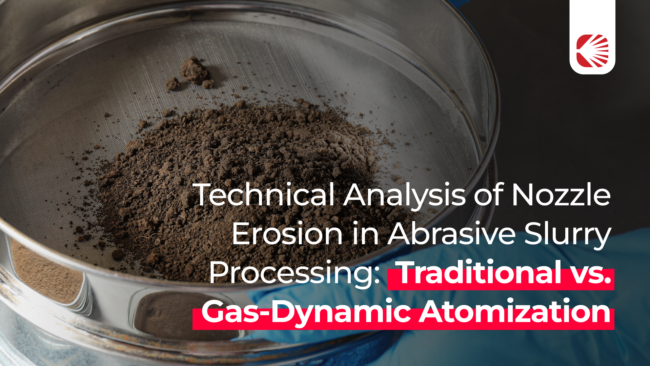
In industrial spray drying, the processing of abrasive mineral or ceramic slurries presents a significant engineering challenge regarding component longevity and process stability. Traditionally, engineers look to advanced material science—specifically tungsten carbide, ceramics, and specialty alloys—to mitigate the rapid erosion of atomization components.
In industrial spray drying, abrasive slurries present a significant mechanical challenge to conventional hardware due to the fundamental dependence on high-pressure atomization. Traditional systems achieve atomization by forcing feed through a restricted nozzle orifice, typically at pressures reaching 5,000 psi. This mechanical process results in continuous erosion of the nozzle, which increases the orifice diameter and alters the spray pattern over time.
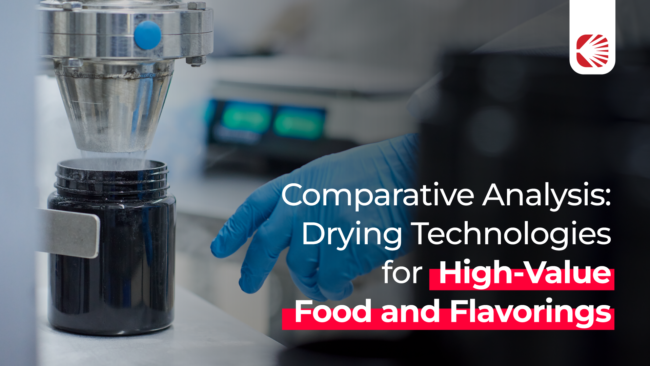
In the food and nutraceutical industries, selecting a drying technology is a critical engineering decision that hinges on a fundamental trade-off: maintaining the highest possible powder quality while managing operational costs and throughput. For products like dairy, coffee, and flavorings, where volatile retention and bioactivity are paramount, manufacturers generally choose among three primary methods: traditional spray drying, freeze-drying, and Pulse Atomization Spray Drying (PASD).
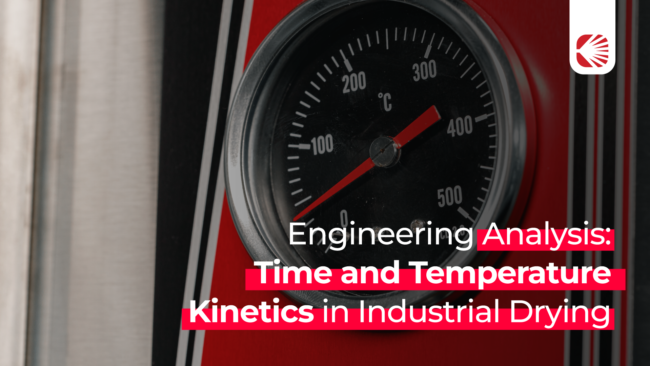
In process engineering, the successful stabilization of heat-sensitive materials is fundamentally a challenge of managing the time and temperature history of the particles. The objective is to achieve efficient moisture removal while preventing the thermal denaturation or degradation of the final product. When evaluating drying technologies, engineers must weigh the duration of heat exposure against the operating temperature of the gas stream.
In the world of industrial processing, few numbers are as closely scrutinized during a capital purchase as “thermal efficiency.” Manufacturers often present data showing their systems operating at peak performance under ideal lab conditions. Yet once the equipment is installed on a factory floor, it may be found that real-world thermal efficiency falls significantly short of expectations.
In the high-pressure environment of industrial manufacturing, plant managers often face a difficult choice: fall short of a production quota or push the equipment beyond its established design limits to close the gap. It is common for teams to “crank up” the heat and increase the feed rate in an attempt to maximize throughput during a busy shift.
The transition from pilot to production requires a standardized framework for comparing competing drying technologies. Selecting the appropriate system is a high-stakes decision that dictates both product viability and long-term operational costs. To facilitate an objective assessment, it’s recommended to evaluate technologies across critical categories: powder quality, demonstration capabilities, operational scale, cost, and vendor support.
In industrial manufacturing, the search for the “perfect” production run often feels like a series of trade-offs. If the throughput to meet a deadline is increased, the moisture levels may creep up. If the temperature is raised to improve thermal efficiency, the powder quality may be degraded.
In the world of industrial spray drying, every manufacturer wants a “unicorn” product: a large, free-flowing particle with near-zero moisture that remains shelf-stable for years. However, the laws of thermodynamics dictate that none of these variables can be optimized without creating a trade-off with the others.
In process engineering, every technology choice involves a series of trade-offs between performance, scalability, and operational requirements. While Pulse Atomization Spray Drying (PASD) offers significant advantages in thermal efficiency and powder quality, it is not a universal solution for every industrial application. To provide a transparent technical evaluation, we must address the specific areas where PASD faces limitations compared to conventional spray drying.