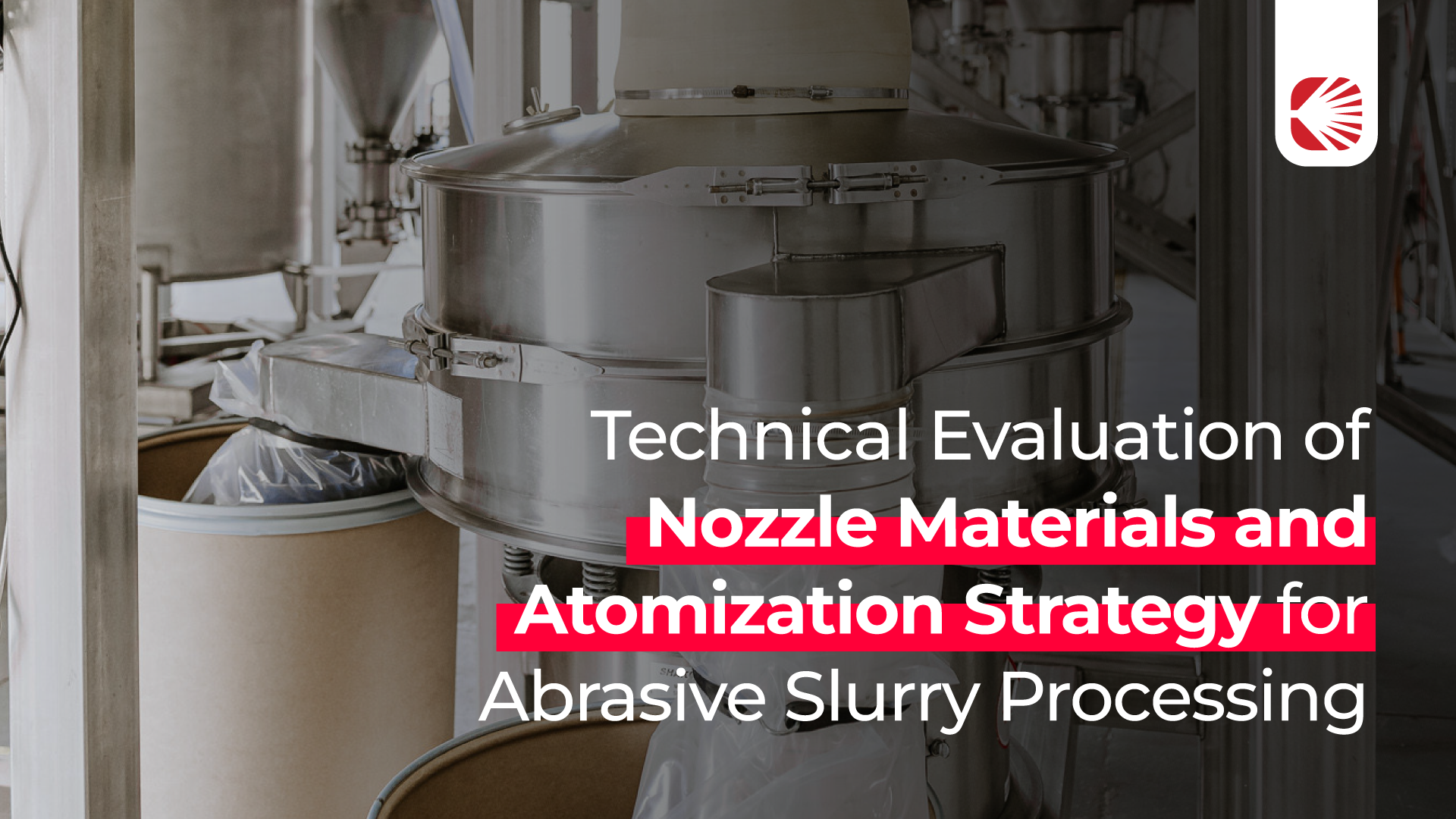
Technical Evaluation of Nozzle Materials and Atomization Strategy for Abrasive Slurry Processing
In industrial spray drying, the processing of abrasive mineral or ceramic slurries presents a significant engineering challenge regarding component longevity and process stability. Traditionally, engineers look to advanced material science—specifically tungsten carbide, ceramics, and specialty alloys—to mitigate the rapid erosion of atomization components.
Details