Practical answers to the problems that cost production time and product: nozzle clogging, pump and nozzle wear, wall buildup, heat damage and batch-to-batch variability. Each article explains why the problem happens and what can be done to prevent it.
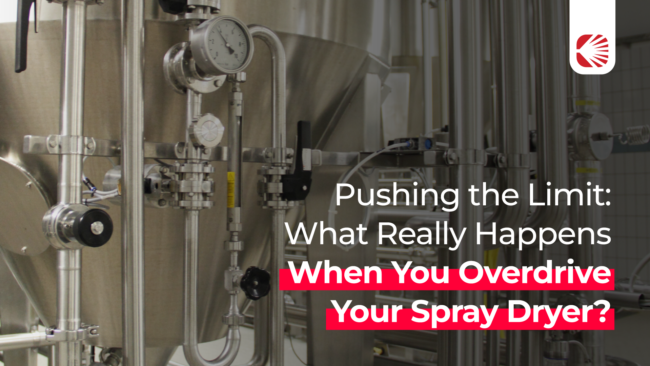
In the high-pressure environment of industrial manufacturing, plant managers often face a difficult choice: fall short of a production quota or push the equipment beyond its established design limits to close the gap. It is common for teams to “crank up” the heat and increase the feed rate in an attempt to maximize throughput during a busy shift.
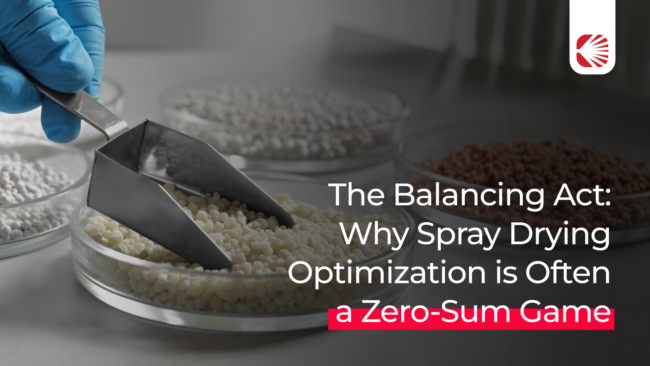
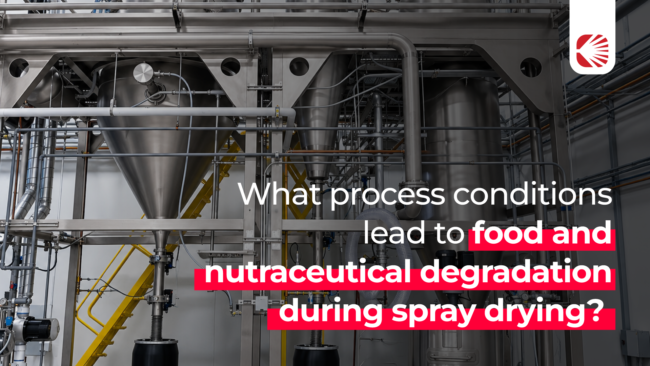
In industrial manufacturing, the search for the “perfect” production run often feels like a series of trade-offs. If the throughput to meet a deadline is increased, the moisture levels may creep up. If the temperature is raised to improve thermal efficiency, the powder quality may be degraded.
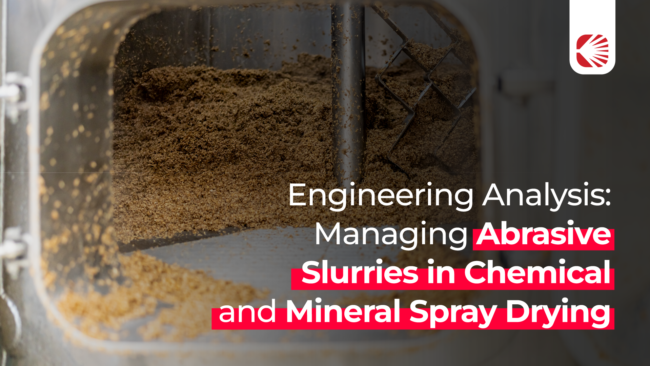
For process engineers handling minerals and specialty chemicals, the primary challenge of conventional spray drying is the aggressive nature of the feed material. Abrasive slurries introduce significant mechanical stress to atomization hardware, necessitating a technical comparison between traditional rotary or pressure nozzle systems and Pulse Atomization Spray Drying (PASD).
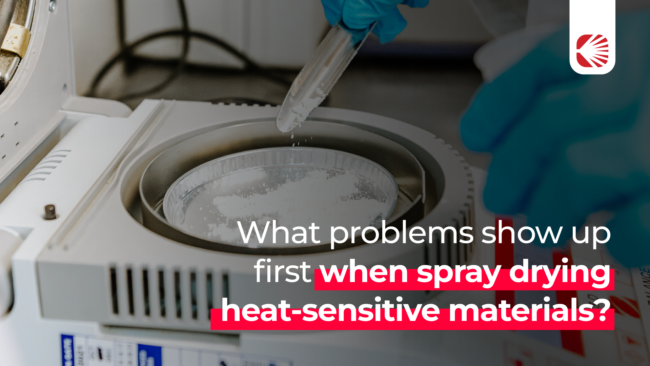
In industrial spray drying, the thermodynamic history of a particle—specifically the relationship between heat intensity and exposure duration—is a primary determinant of final product quality and bioactivity. While both Pulse Atomization Spray Drying (PASD) and most conventional spray dryers operate using co-current flow, their mechanical designs result in divergent residence times and thermal protection capabilities.
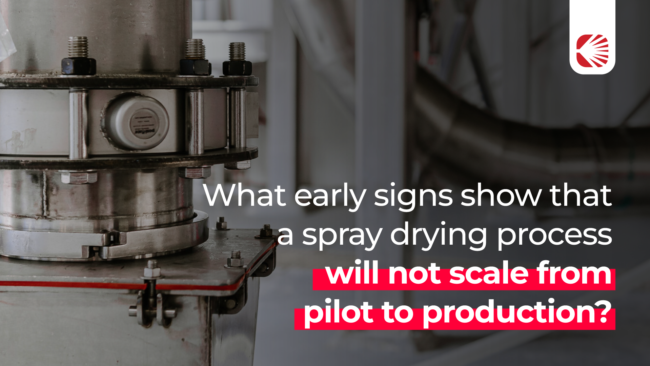
It is a story told in laboratories and R&D centers across the globe: a team spends months perfecting a formulation on a benchtop spray dryer. The powder is perfect, the yield is acceptable, and the stakeholders are ready to greenlight full production. But the moment that same material is fed into a commercial-scale tower, the process collapses. The powder comes out too wet, the particles are the wrong size, or the material simply sticks to the walls and scorches.
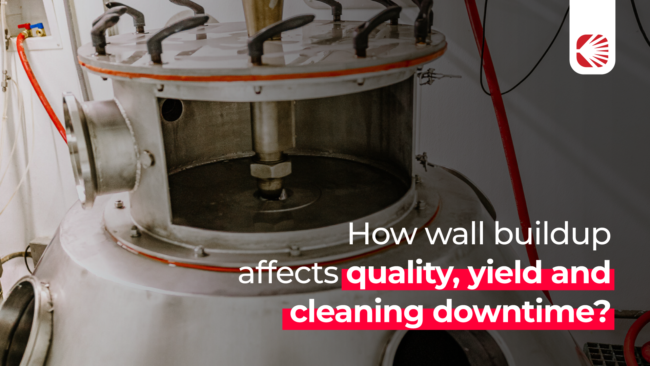
If you have ever opened your spray drying chamber at the end of a production run only to find a thick, scorched layer of material clinging to the stainless steel, you have witnessed one of the more expensive failures in process engineering.
One of the most persistent frustrations in spray drying is the “mystery” of the inconsistent batch. The quality control team confirms the liquid feed meets the specification, yet Batch A produces a perfect, free-flowing powder while Batch B is scorched, sticky, or off-color.
One of the most persistent frustrations in spray drying is the “mystery” of the inconsistent batch. The quality control team confirms the liquid feed meets the specification, yet Batch A produces a perfect, free-flowing powder while Batch B is scorched, sticky, or off-color.
One of the most persistent frustrations in spray drying is the “mystery” of the inconsistent batch. The quality control team confirms the liquid feed meets the specification, yet Batch A produces a perfect, free-flowing powder while Batch B is scorched, sticky, or off-color.
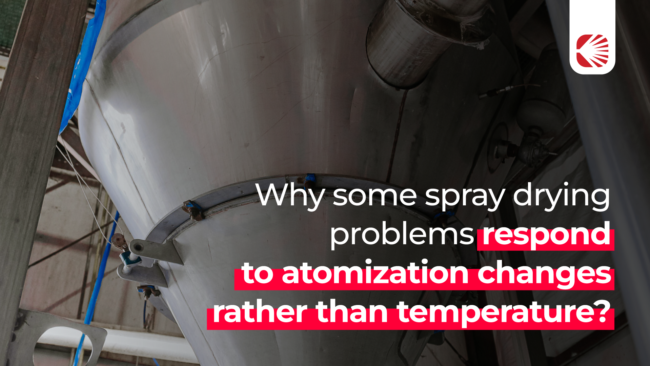
Even the most advanced technologies, like pulse atomization spray dryers, have “bad fit” scenarios. This article explores the three primary reasons spray drying fails even when the equipment is operating correctly, and how to determine whether the product is simply a bad fit for the technology.